Monday, 13 May 2013

Water of Leith - Craiglockhart and Colinton Dells

The Water of Leith, "a silver thread in a ribbon of green", wends its way from its source high in the Pentland Hills, snaking its way through the very heart of Edinburgh until it flows into the Firth of Forth at Leith twenty four miles later. A veritable oasis of green, a peaceful escape from the hustle and bustle of city life, a place to stroll at will in quiet contemplation, the Water of Leith Walkway runs alongside the river for its full length. So much to see, so much to ponder over, hardy souls walk the full length whilst others join and leave again at various points along the way.
Craiglockhart and Colinton Dells can be accessed across the road from the Water of Leith Visitor Centre, and affords a lovely walk to the village of Colinton a couple of miles away.
This deep-sided gorge extends from the delightful Colinton Parish Church towards Slateford. Carved out by the river, this impressive gorge has been continuoously wooded since the last ice age, a haven for wildlife and home to many species of trees. Mature and ancient mixed woodland include ash, lime, sycamore and beech, and are peppered with the occasional dramatic appearance of a gnarled oak or glimpse of yew and hornbeam. The wooded riverbanks are carpeted with wild flowers throughout the spring. Blossom hangs from branches, whilst bluebells, anemones and buttercups push their way up through the forest floor. The heady aroma of wild garlic fills the air, the delicate white heads of this fragrant plant waving gently in the breeze.
Designated as an Urban Wildlife Site, the wooded river banks and dense layers of shrub are bursting with woodland birds and animals. Over eighty species of birds can be found, including the heron, kingfisher, dippers ...... and of course the obligatory duck. Wrens and song thrushes flourish in the woodland tree creepers. And keep your eye out for otters, voles, stoats and weasels. If you are really lucky you may even spot the odd roe deer. The river itself plays host to a number of brown trout along with around a dozen other species. Even the occasional pike pops up every now and then.
But this section of the Walkway is also steeped in history, the past very much in evidence as you progress towards Colinton. Once very much Edinburgh's industrial heartland, the valley boasted over seventy mills harnessing the power of the water and producing paper, fabric, flour and linoleum. The mouth of the river supported a vibrant shipbuilding industry and busy dockland area, so important to the city at that time. The heart of the Dell sees you enter the land of Redhall House and Estate. The property of one Sir John Inglis in 1765, he hired a renowned landscape architect, Robert Bowie, to enhance this already beautiful area. He created a  landscape of ornamental trees, riverside paths, a walled garden, a fine hexagonal doocot (dovecote) and two grottos. The entrance to the estate is marked by a fine stone bridge - Bogs Mill Bridge - along with an avenue of lime trees. Redhall Walled Garden lies on the north side of the river, on the site of Jinkabout Mill.
One of the most visually impressive features of this part of the Water of Leith Walkway is Redhall Weir, which I believe feeds the still running lade (mill stream) to Redhall Mill and its cluster of cottages. Dating back to 1718, this collection of mills produced paper, ground barley, and latterly wood flour used in the making of linoleum, eventually falling silent in the 1980's. It is said that the paper for the Bank of Scotland's first bank notes was made at Kate's Mill!   
Arriving at Colinton, you have passed through so much. From the world of nature to Edinburgh's industrial past, it is all there in just a few miles. Remnants of yesterday mingle with wildlife, stretching along the riverbank, clinging to the sides of the gorge. Narrow, steep and stepped paths, bridges, level walkways, all lead you through the world that is Craiglockhart and Colinton Dell. Dog walkers, cyclists, joggers, and those just enjoying a stroll through the Edinburgh countryside, they are all there, so join them and see for yourself just how beautiful this "silver thread in a ribbon of green" really is.


Saturday, 11 May 2013

Scottish Heath Garden

Every time I pay a visit to the Royal Botanic Gardens - and these are becoming more and more frequent - the environment is constantly changing, a rainbow of shifting colours, every shade of green imaginable bedecking the trees and shrubs, a landscape moving with the seasons, reflecting their moods. And the more you wander around, the more you discover, little niches to be explored like a book whose pages never end.
Replacing the old heather garden, the present Scottish Heath Garden was planted as recently as 1997, and comes complete with a simulated abandoned croft constructed using recycled materials from the original garden. This is a wonderful area to wander around, a plethera of native plants creating a natural haven for wildlife in a realistic countryside setting. It is difficult to believe that you are in fact in the middle of a city. There is even a lochan, built using peat blocks for a more natural looking effect. The whole garden is a mass of upland plants which are commonly found growing together in
the Scottish hills, bringing a wonderful sense of the countryside to Edinburgh. And although they are not native, several large trees and shrubs have been retained from the original garden, kept both for their botanical importance and to give structure to the Heath Garden.
Take time, also, to peruse the various information boards and learn a little about the history of some of the plants within the garden. Did you know that most parts of broom are deemed toxic - but that did little to deter the Scots from making a "heady wine and strong beer" out of the flowering tips. Surprising? I guess not for such an intrepid nation that loves its drink - and this is in no way a criticism! And of course we all know about the broom-making industry. Heather, abundant and versatile, a favourite for making luxurious matresses, hard-wearing baskets and brushes, a source of fuel for the fire ...... and a flavour for beer! The perfect home for baby grouse, it provided watertight thatch - for houses, not the grouse - as well as super-tough ropes.
Lets move on to gorse, prickly, spectacular golden flowers
during the late summer months, scented with coconut, yielding a vibrant yellow dye. Throughout the winter the tough older stems remain green, and when ground up to get rid of the spines made nutritious winter fodder for sheep and cattle. And furthermore, a gift of gorse was considered unlucky in Fife. Why? Search me! So much to see, so much to learn. Soft rush, used for thatching and basketry, the spongy pith inside the leaves an ideal wick for candles once dipped in fish oil or mutton fat. Willow branches, an ideal wood to weave into fences, their amazing ability to regenerate meaning they soon form the perfect hedge. And the bark of the willow was often chewed to relieve pain, making it an ancient form of aspirin! Juniper, a distiller's dream, the berries of this spiny shrub give gin its distinctive flavour. The ideal fuel for illicit whisky stills, the wood burns with little smoke and a pleasant aroma - back to the drink again! I can't leave without mentioning the good old Scots Pine, Scotland's native Christmas tree. Torches and candles were made from the resin-rich pine roots, and the wood an ideal material for building. Unfortunately, its high demand, coupled with long-term climate change, has all but wiped out the great Caledonian pine forests. Those that remain are today some of Scotland's important sites for biodiversity. High demand, versatility, cost-effective - so much of the natural world around us is swallowed up in our desire to have the best, get bigger and better. Progress always seems to come at such a high cost. The more we have, the more we want. Spend some time in these wonderful Gardens, admire their beauty, see at first hand just how fragile the world around us really is. And be thankful that places like the Royal Botanic Gardens are playing their part in ensuring many of our endangered species continue, at least for the time being.


Friday, 10 May 2013

The Walter Scott Monument

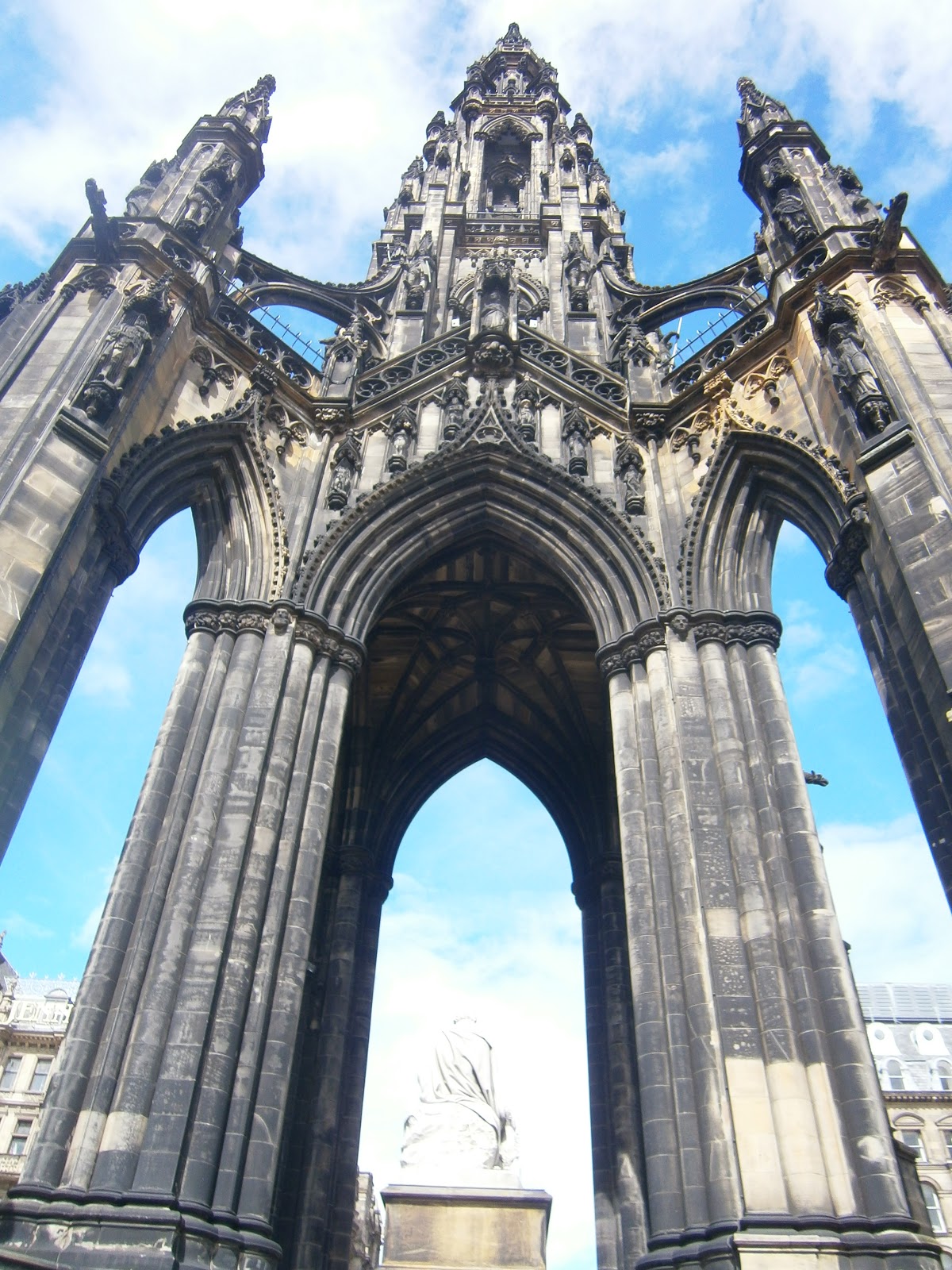
At first glance, one may be forgiven for thinking some bizarrely designed rocket had landed in Princes Street, towering over the Gardens with its sombre complexion and brooding stance. But this 200ft gothic spire, the largest moument in the world to be erected to a writer, was created in honour of local novelist and prolific writer, Walter Scott. Designed by a certain George Meikle Kemp, a carpenter from Midlothian, he entered the design competition under the pseudonym John Marvo. Why? He feared that his lack of qualifications and reputation in the world of architecture would disqualify him. However, inspired by the incredible architecture of Roslin Chapel and Melrose Abbey, he won the competition over many well-established names in this field, and the foundation stone was laid on August 15th, 1840, Walter Scott's birthday, the inauguration ceremony being held on the same date six years later.
This colossal creation, a testimony to the talent of Walter Scott and the importance of his contribution to Scottish literature - he wrote twenty three historical novels - is
constructed of Binny sandstone. Its dark colouring is the result of soot and pollutants sticking to its oily shale stone surface. Despite attempts to renovate the Monument during the 1990s, the building obscured by scaffolding for many years, the decision was ultimately taken not to clean the stone fearing it would sustain considerable damage. But the restoration programme did replace old repairs and areas of damaged stone, reopening the original Binny stone quarry to do so, although the Monument still retains its heavy, dark colouring.
So what does this prestigious memorial hold? 287 stairs will take those with the necessary stamina to the very top of the Scott Monument. Following the narrow spiral staircase, a series of four viewing decks offer spectacular views across
Edinburgh, truly breathtaking from the very top. Niches carved into the building contain sixty four statues, characters from the books of Walter Scott. And the statue at the base of the Monument depicts Scott with his devoted dog, a deerhound called Maida, carved from Italian Carrara marble by the sculptor Sir John Steell. For those without the willpower to climb the staircase, the museum room holds information on both Walter Scott and the Monument, and you can take a Scott Monument Virtual Tour.  
I am sure most of us are more than a little aware of Walter Scott. But did you know that all his novels were originally published anonimously, although it soon became an open secret and was widely suspected that this mysterious writer, nicknamed "The Great Unknown" and "The Wizard of the North" was in fact Scott himself. He finally revealed himself in February 1827 at a public dinner in Edinburgh. How far did people go, I wonder, to feign surprise! A leading citizen of this fair city, did you know that he rediscovered the hidden Royal Scottish Regalia in Edinburgh Castle, and threw himself into organising the visit by George IV in 1822. This was the first visit across the border by a British monarch since Charles II in 1650. And furthermore, this event led to a revival in the wearing of previously banned tartan. So you see, he didn't just write books. He was in fact trained in the law. But throughout his novels he demonstrates a true and deep understanding of the periods of history that run through his books, both people and places treated with care, compassion, affection - and a great deal of knowledge.
It is always a shame to end on a sad note - but end on a sad note I must. George Meikle Kemp, designer of the Scott Monument, never lived to see its completion. He tragically drowned in the Union Canal one foggy night ....... What a legacy he has left the city of Edinburgh, though. The Walter Scott Monument. You can't miss it, you mustn't miss it, so make sure you don't miss it and go see it. I won't tell you twice!!  


Penguins rock at Edinburgh Zoo!


Everybody loves a penguin. These naturally inquisitive, flightless birds waddle and hop over rocks, toboggan along on their stomachs, and have the ability to swim faster and dive deeper than any other bird. Highly sociable creatures, they communicate by sign language using their heads and flippers, and attract more than a little attention wherever they go. Whether in a zoo or observed in their natural habitat by those of us fortunate enough to have this opportunity, the penguin will amuse and entertain, loving an audience and the chance to show off. Comical, endearing, loveable, and captivating, they hold us spellbound as they move with ease through the water delighting us with their antics.
The penguins who reside at Edinburgh Zoo have more than most to be proud of. Launched in the centenary year of the Zoo, the penguin pool - Penguin Rock - has been revamped, and their impressive new enclosure has enhanced the whole experience for both penguin and visitor alike. Unique, exciting, innovative, up close and personal, you will spend more than a few moments enjoying the penguins and their posh pool. Lower perimeters made from glass and wood bring you within touching distance of the birds, enhanced viewing areas give superb observation platforms, and the penguins themselves gave inspiration to the interactive interpretation display. Feathers, eggs, nesting rings and parasols all feature.
And the pool itself? Clear aqua blue water, mock sandy beaches, rocks, a beautiful stone waterfall, a carved rock diving board and a water chute all ensure hours of fun for penguin and visitor alike. So bring on the Penguin Olympics. Edinburgh would certainly win its fair share of gold medals! Watch how elegantly they move through the water, leaping out every few feet in a move known as porpoising and which enthralls all who see it. This helps them to breathe, coating their plumage with tiny bubbles to reduce friction - or so they tell me. And you can also watch the penguins under water through one of the glass sides to the enclosure, yet
another awe-inspiring sight.
So where did the penguins go whilst their new home was under construction? Some remained at Edinburgh Zoo. A number of gentoos popped off to Belfast or Denmark for a holiday, and the king penguins languished in Gloucestershire for the renovation period. Now they are all firmly ensconced in their new state-of-the-art residence, a major attraction at the Zoo has resumed. The world famous Penguin Parade, the pride of the Zoo since 1951, draws the crowds and is the envy of all the other Zoo's inhabitants. It is lovely to watch them waddle as only penguins can, over the penguin brick footprints. A nice way of raising "penguin pennies", they carry  
personal messages, dedications made in remembrance of or for loved ones. How did this parade originate? In 1951 a keeper left the enclosure door open, and a quick-thinking gentoo escaped. But rather than recapture this miscreant, the keeper decided to see what would happen next. Followed by other penguins, they marched down the walkway of the Zoo to Corstophine Road and back - and the Penguin Parade was born. Go to Edinburgh Zoo, peruse  Penguin Rock, peep at the Penguin Parade, and pop in again and again. Oh for the life of a penguin ......... You may even catch feeding time. Now there's another fishy experience!!


Monday, 6 May 2013

North Queensferry Light Tower

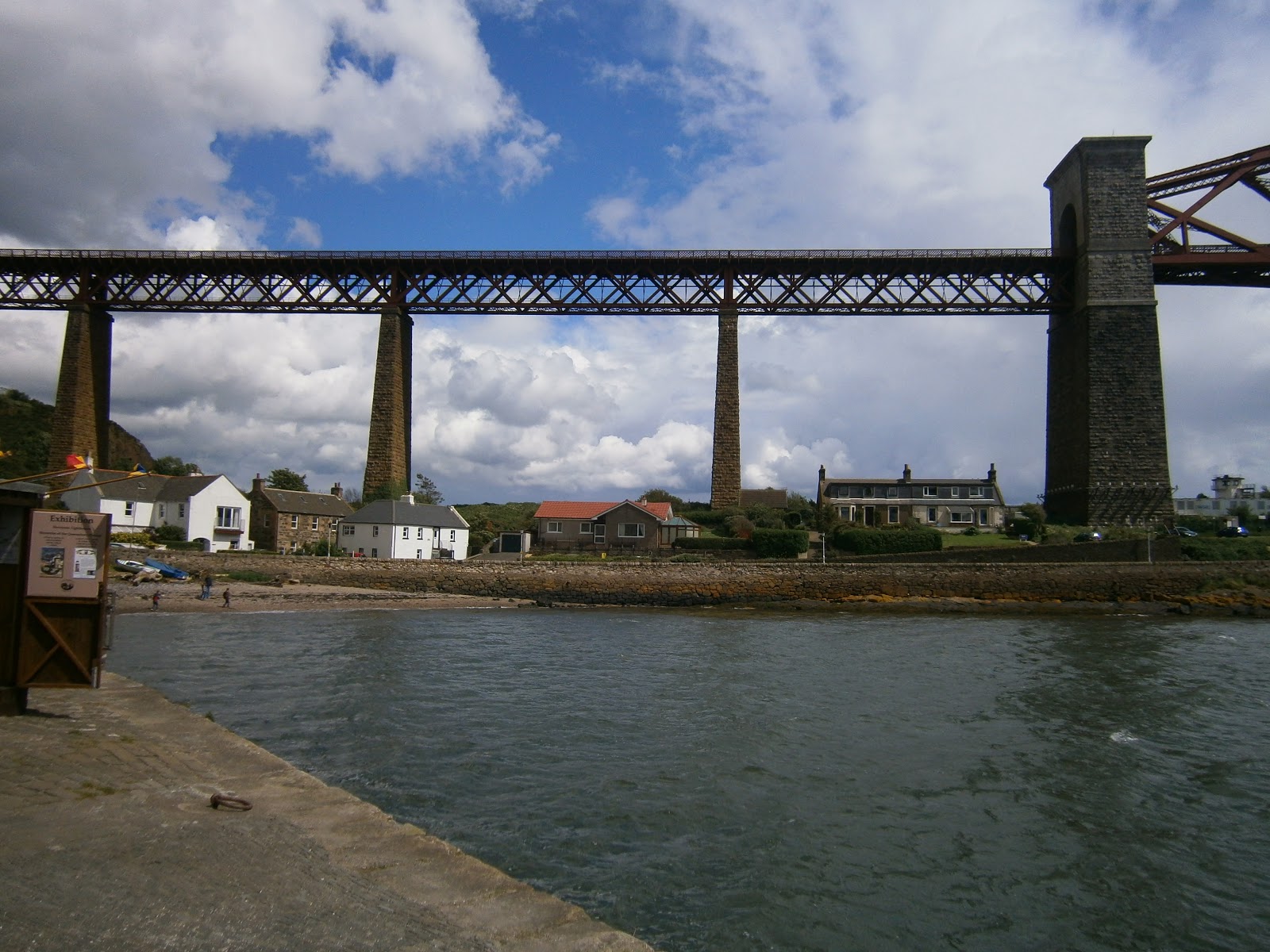
North Queensferry lies on the banks of the Forth, nestled between two commanding structures - the impressive feat of modern engineering that is the Forth Rail Bridge, and the more genteel-looking Forth Road Bridge. Steeped in history it is a fascinating place to wander around, signs of a rich maritime past hiding around every corner. And with the Firth of Forth being at its narrowest point here, North Queensferry grew in importance as a transport link across this stretch of water, and holds the distinction of housing the world's smallest operational light tower. Sitting on the Town Pier, dwarfed by the trademark red paint of one of the engineering wonders of the world, the Forth Rail Bridge, the North Queensferry Light Tower stands only 21 feet high. It was built by Robert Stevenson, engineer to the commissioners of Northern Lighthouses, playing a key role in the developing of the Queensferry Passage across the Forth and replacing the Old Harbour Light Tower also designed by Stevenson, which had originally
been installed on top of the Signal House staircase. This tiny, but nonetheless vital, part of Scottish maritime history, has been restored by the North Queensferry Heritage Trust and is once again in full working order. The lamp was relit in June 2010 by HRH the Princess Royal some 120 years after it had fallen into disuse, and should be seen by everyone who visits this fascinating town. Discover first hand how the light-keeper kept the lamp burning. Find out how the unique signalling system worked. And become a part of the history of this gem in Scotland's maritime crown by lighting the lamp and receiving a Certificate of Competence as an Honorary Keeper of the Light.
Beside the Light Tower stands its equally small, but nonetheless fascinating, tour guide office, a treasure chest of information on the lighthouse with a display of passage-related items and gifts. A replica of the Book of Regulations from 1843 contains a table of freight charges, porters, regulations, and sailing times, as well as a comprehensive list of the signal flags that were flown from the ferries to hail specific types of transport for onward journeys. Heavy freight would arrive at the port in a horse and cart, whilst those from the higher echelons of society would bring themselves and their goods in a light carriage, or "chaise and pair." These hired vehicles and horses would be left behind, and a fresh set picked up on the opposite shore. It was left to the ferry crew to hoist the relevant flags, indicating exactly what was required, the ostlers and carriage hands then ensuring all was in readiness for a swift onward journey. Today, the Fisherman's Hut sports a set of modern signal flags. Visitors can use them to create their own short messages. Command a fleet or spell out your name - it all makes an interesting souvenir snap.
For a real feel of what life was like as Keeper of the Light, grasp the opportunity while you are there to light the lamp. The Duty Superintendent of Passage will escort you up the twenty four narrow steps to the lamp, following in the footsteps of those who did so over 100 years ago. Discover how they kept the lamp burning, learn more about the unique signalling system, and hear how this tiny lamp kept passengers, livestock, cargo, and the Royal Mail safe on the Queensferry Passage. Receive a short introductory course on lighthouse procedures and optics - then comes the moment you can light the lamp and bring it safely to "Standard Flame Height." Your reward? Apart from creating your own little piece of history, you will be given your Certificate of Competence, stating that you are now an "Honorary Keeper of the Harbour Light Tower at North Queensferry, in the kingdom of Fife." So go on, do it. Cross the Firth of Forth 21st century fashion, then take a step back in time and discover one of this country's hidden gems. The North Queensferry Light Tower, so small and unimposing, yet so so important for the safety of so many and the efficient running of the Queensferry Passage. One small light piercing the night sky, holding in its beam those on the water leaving the haven of one shore for the safety of another. They do say the best things come in little packages ........    


Friday, 19 April 2013

Spring is Here ....... More from Sammy and the Botanics

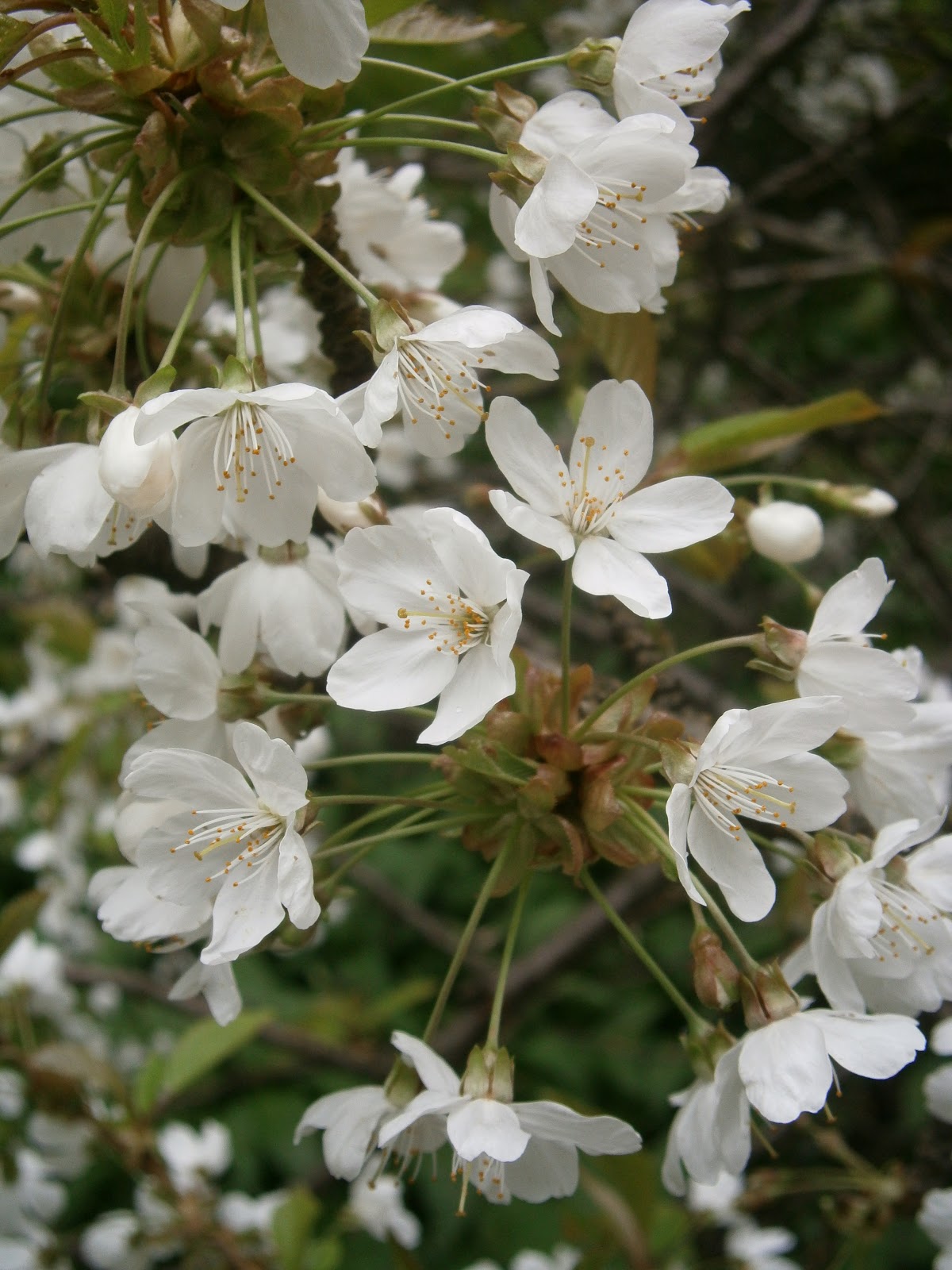
Spring is finally here or so it seems on the latest of my many trips to the Botanics. I had almost forgotten that the sky is blue in colour and not a depressingly drab grey. Leaves are staring to appear on their branches, slowly bursting forth from the protection of their sticky buds. Snowdrops no longer rule the roost, explosions of colour heralding the arrival of the spring sunshine. Myriads of crocuses in purple, yellow and white pepper the grass, brightly coloured tulips line the pathway to the glasshouses, and dainty blue heads pop up from amongst the flowerbeds. Catkins hang from the trees and daffodils bow their heads gracefully in the softly blowing breeze. People are walking around smiling, enjoying the wonderful weather, no longer huddling under their coats shivering with the cold.
Sammy the squirrel was easy to spot on such a glorious day. He was beside himself with excitement at the first real sight of spring. The tartan scarf now abandoned, the tam o' shanter still perches precariously on his head "just in case the odd chill wind catches me by surprise." Rarely have I seen Sammy so animated, so eager to sit and chat. Sitting upright on his back legs, a somewhat mischievous glint in his eyes, he looks around as if awaiting an audience, before rubbing his front paws together in delight and launching into his "welcome to spring" speech.
"Look at this, just look at all this. Someone has finally returned the sun to the sky and what an effect it has had. Listen to that birdsong, a welcoming fanfare if ever I heard one. And the flowers, just look at the flowers. Colour everywhere you look. The waterfalls have returned. What wonderful music they make. Children are laughing and playing, people are eating outside ....... I bumped into Robbie Robin earlier and he was hopping around in sheer delight. People eating outside means crumbs, and crumbs mean happy robins. I only have one complaint - a very minor one of course, although I do so hate to break the magical spring spell." He beckons me a little closer, and as I lean forward he whispers: "The frogs. Lovely to see them, of course, and it can't be an easy life keeping an eye out for the long beak of Hamish the heron. But take a look at the pond ........ our slimy friends are spawning. I know the cycle of life must continue, but I do wish they would do it a little more quietly. That incessant croaking drives one to distraction. But shouldn't complain I suppose ....." Is that the hint of a smile I see on Sammy's face? Updating me on the current status of his offspring, he tells me they are starting to spread their wings - or should that be tails. Seems like only yesterday he was fretting about their imminent arrival. "Won't be long before I can stretch out and enjoy my newspaper in peace" he adds, before raising his tam o' shanter politely, bidding farewell, and scurring off across the grass.   
The wildlife pond is indeed a hive of activity. So many frogs, so much noise, and so many parents awaiting the inevitable questions from their youngsters. Frogspawn holds a fascination for children, this jelly-like substance
floating as if by magic, clinging together, filling
every spare inch of water. Excited children watch this spectacle wide-eyed, almost willing the tadpoles to appear without delay. And they will ..... soon. Hundreds of them, darting in and out like little black commas. I have always thought of tadpoles as little black commas. Is that the writer in me or just the strange way my mind works? Or maybe a bit of both .... Anyway, I am now off to soak up the sun, wander up to
the Terrace Cafe and partake of cake and a cuppa outside. The Botanics ...... what a glorious place to be when the weather is at its very best!


Inchcolm Island


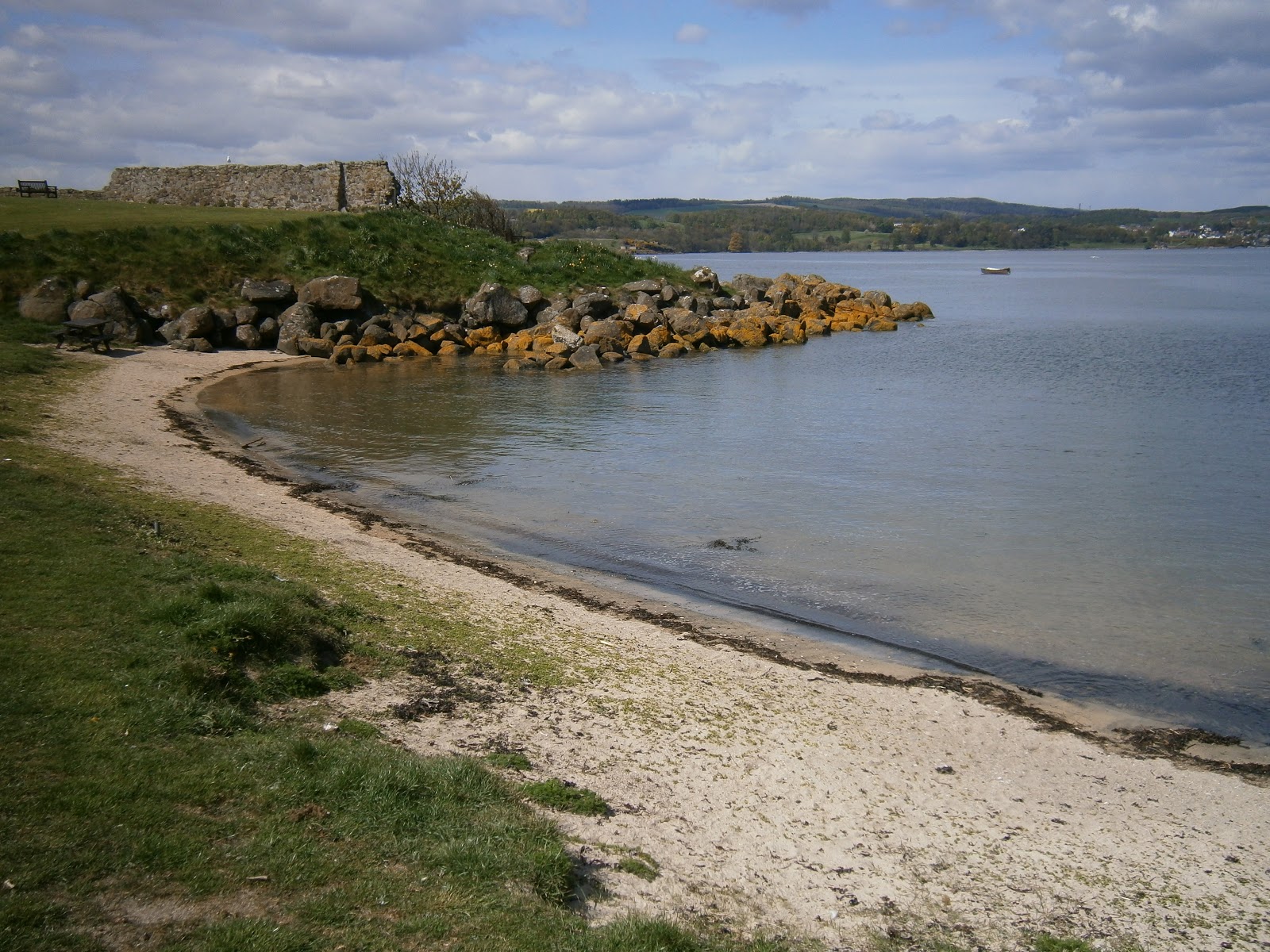
Steeped in Scottish history, Inchcolm Island is without doubt the most beautiful of all the islands in the Firth of Forth. Just a short boat ride from South Queensferry, a visit here will allow you the privilege of wandering around Inchcolm Abbey, a 12th century Augustinian abbey in remarkably good condition with some of the best-preserved monastic buildings in Scotland. As you walk around the ruins - and I use ruins for want of a better word - you gain a strong sense of how monastic life may have been many hundreds of years ago. Three covered cloister walks survive, along with a widely visible square bell tower, a refectory, chapter house, and a largely

ruined church. So why is the abbey here at all? In 1123 King Alexander I found himself storm-bound on the island for three days. Grateful for the shelter afforded him by the island's hermits, he promised to establish a monastic settlement in honour of St. Columba, after whom the island is named. Although he died before fulfilling this promise, his brother David I founded a priory here, with the help of a group of Augustinian canons, and it rose to full abbey status in 1235. There is much to the history of this incredible island. Known as the "Iona of the East" it was allegedly visited by an Irish missionary monk - St. Columba - in 567, and was later named after him. A popular home for hermits, you can still see the ruins of 9th century hermit's cells today. Long used as an exclusive burial site, even gaining a mention in Shakespeare's Macbeth, 11th century Danes paid vast sums of money to have their dead buried on Inchcolm.
Located in the centre of the Firth of Forth, its position left the island of Inchcolm open to continued attacks by the English, suffering frequent raids during the 14th century Scottish Wars of Independence. But the island, on occasions, fought back. The weather, or maybe the wrath of St. Columba, defeated attempts by the English to steal the abbey's treasures and torch the buildings. Frustrated by these unrelenting attacks, the monks spent more and more time ashore in Fife, and the abbey was abandoned following the Scottish Reformation in 1560.
But there is more to the island than the abbey. During the First and Second World Wars, Inchcolm was fortified in an attempt to protect both Edinburgh - Leith and the naval base at Rosyth. This included a battery of guns and a tunnel constructed under the hill at the eastern end of the island. The remains of a NAAFI are today used as a shop by Historic Scotland, who now run the island. Inchcolm has also been used as a makeshift prison in its day, and in the 1880's a skeleton was discovered built into one of the walls of the abbey. Found standing upright, it is of unknown date. Who, why, when we can only surmise.
Separated from the mainland of Fife by a stretch of water known as Mortimer's Deep, there is a huge population of seagulls on Inchcolm Island, which at times can make a visit here more than a little interesting, especially during the breeding season! But due warning is given when you arrive. There is an abundance of wildlife to behold, including grey seals, razorbills, puffins, aand guillemots. And if you are really lucky you may spot dolphins, porpoises, and even the odd Minke whale. This is a wonderful place to come, boats leave from South Queensferry and allow you an hour and a half ashore to enjoy the island. It is well worth it.