Beadnell, an ancient village, was in all probability established in Saxon times. Bronze Age burial chambers have been found along the shore, and the remains of an ancient chapel were discovered in 1853 on the headland of Ebb's Nook. Excavations suggested that the building erected on this spot was dedicated to St. Ebba shortly after the arrival of
 Christianity in Northumberland. For a small place, Beadnell has an interesting history. During the 18th century, the popular Beadnell races took place along the sands. However, tragedy struck in 1794 when one of the riders was killed, and the races were no more. Sandstone and coal seams run out to sea, and mining took place here until early Victorian times when seemingly more lucrative activities came to the fore.
  By the 19th century, Beadnell was an important fishing village. A century earlier it had the unenviable - or maybe enviable - reputation of being a first class resort for smugglers. One of their secret hideouts, a hidden vault, was disovered on the Farne Islands during the restoration of the Chapel of St. Cuthbert. A wonderful haul was seized by customs officers on a particularly eventful September day in 1762 - though not for the unfortunate Scottish smugglers involved - when they stumbled upon 2,700 gallons of brandy, 400 gallons of rum, 23 hogsheads of wine and some tea, presumably for the hangover!!
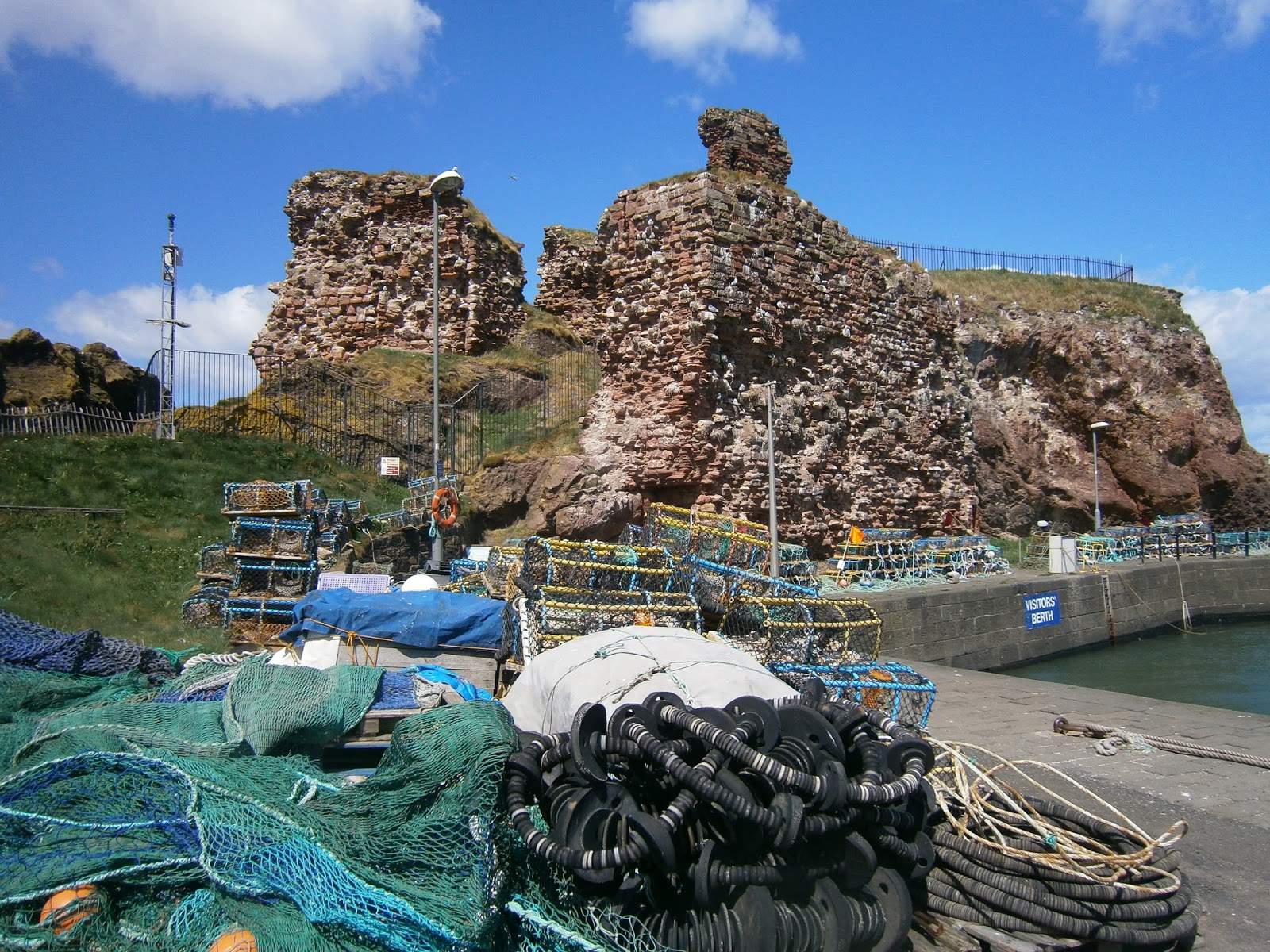
You want more fascinating facts? Of course you do. Beadnell has the only west-facing port on the east coast of England. Cool eh ..... Limestone is also present around the village, and to exploit this profitable commodity, the first kilns were built here in 1747. Next problem? Exporting this commodity. To facilitate this, the harbour was built. Limekilns needed coal to operate. Hey presto, coal seams were also present in Beadnell. And so it grew in importance, this quiet little village. Fishing was also rapidly expanding, the exporting of fish and lime as well as salt made a better harbour a neccessity, and by 1798 the pier had been built and a gentleman by the name of Richard Pringle found this an ideal spot on which to construct his limekiln. However, herring fishing was set to overtake lime in importance and Beadnell fast became the main herring fishing village on the north-east coast. In fact, so the story goes, one thousand fishermen entered the harbour one evening in 1828 to shelter from a storm. 1822 had seen the decline of the poor old limekilns, by this time used to cure herring. Today they have been rescued and restored by the National Trust and are used as stores by the local fishermen.
 I love it here in Beadnell, stormy skies, angry waves, howling winds, Mother Nature showing just why she is in charge of our world and not ourselves as we would often like to believe. Wander among the sand dunes, stretching as far south as the eye can see, wonder at the power of the sea, feel the wind in your hair, taste the saltiness of the water clinging to your lips. Then pop along to the Craster Arms for a lovely meal and well-deserved drink. This friendly inn was once Beadnell Tower, a three-storeyed pele-tower built in the 16th century. And much of the original building still survives - the vaulted basement now used as a beer cellar, the remains of the newel staircase which led to the next floor, an old fireplace on the ground floor, and the walls which in places are eight feet thick. When you are suitably refreshed take a turn around the village. Discover the Beadnell Tower Hotel - a former granary - the chapel on the green originally built in 1740 and rebuilt in 1860 ..... go see it all for yourself. My fingers need a rest, they are not as nimble as they once were, so it is over to you .........